The existing floor
Identify what was damaged or removed and what remains. The replacement area should be considered alongside thresholds, fixed cabinetry and connected spaces.

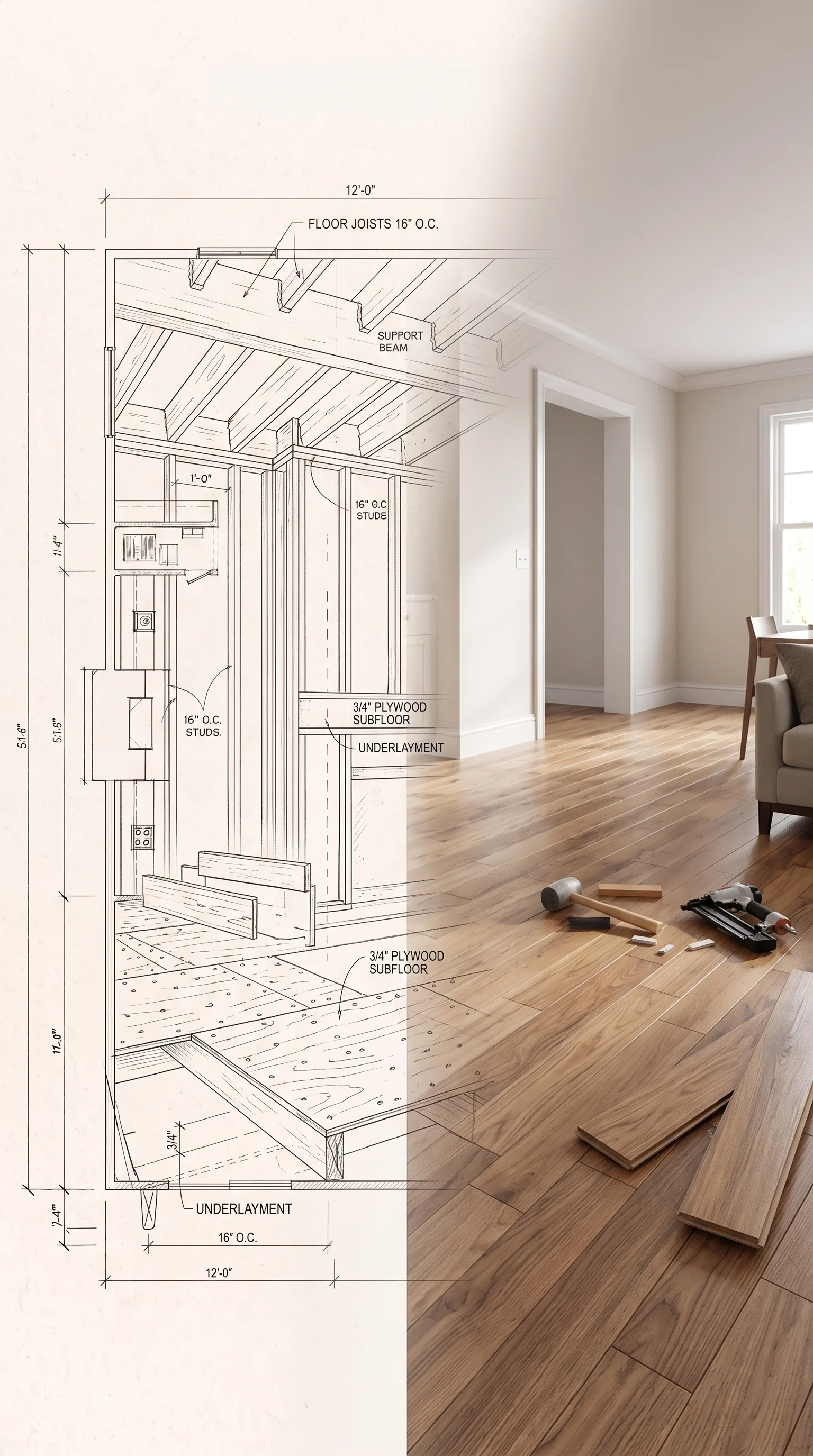
Flooring Replacement After Property Damage / GREATER MONTRÉAL
Replacing a damaged floor means considering what is underneath, what meets its edges and how the rooms connect.
RECONSTRUCTION AFTER THE LOSS
Flooring replacement after a loss involves more than choosing a new visible surface. Metrospec Construction coordinates replacement flooring in Greater Montréal as part of residential and commercial reconstruction after the necessary cleanup, drying and remediation. The scope considers the affected covering, the condition of the support beneath it, adjoining rooms, door clearances and trim. We discuss material availability, finish choices and how new flooring will meet retained surfaces. Where damage or removals extend beyond one room, the work should be considered together. For an insured loss, replacement areas, proposed materials and any optional upgrades should be clarified with the relevant parties before work is authorized.
DEFINE THE WORK
Identify what was damaged or removed and what remains. The replacement area should be considered alongside thresholds, fixed cabinetry and connected spaces.
Review preparation needs before the new covering goes down. Conditions discovered beneath a removed floor may affect the repair scope and should be discussed.
Discuss materials appropriate to the room, the intended use and the agreed scope. Availability, product dimensions and installation requirements influence planning.
Coordinate transitions, baseboards, door clearances and the meeting point with retained flooring. Those details help the rebuilt area feel connected.
BEFORE ORDERING OR STARTING WORK
A doorway may provide a natural transition, while an open space raises different continuity questions. Agree on the boundaries before selecting quantities.
An exact match may not be available, particularly with discontinued products or aged finishes. Discuss samples and transition options before committing.
Furniture, appliances and fixed components can influence access and sequencing. Clarify the working area and who handles each preparation item.
BEFORE WE SPEAK
You can call even if some details are still being worked out. For an insured loss, keep your insurer or adjuster’s contact information handy as well.
EXPERIENCE BEHIND THE WORK
John Mitropoulos’s industry experience dates to 1995. It brings perspective to the connections between affected components, preparation and the practical decisions involved in rebuilding.

YOUR QUESTIONS, ANSWERED
Matching depends on the original product, availability, wear and finish changes over time. Samples can help compare options, but an exact match should not be assumed.
That depends on its condition once the affected areas can be assessed. The scope should distinguish replacement of the visible floor covering from any work needed beneath it.
The affected areas and how the floor connects must be considered. Replacement boundaries and transitions should be discussed; continuity alone does not establish insurance coverage.
Yes, discuss the proposed material and its implications for preparation, height, transitions and cost. Optional upgrades should be separated from the agreed loss-related repairs.
Coverage depends on your policy and the assessment of the claim. Clarify the approved scope, any limits and payment arrangements with your insurer or adjuster; discuss optional improvements separately.
AFTER THE LOSS. THE NEXT STEP.
Tell us about the affected areas and what has already been completed. We can discuss the work that comes next.