Surface preparation
Coordinate the condition of repaired drywall and other surfaces before the finish is applied. Clarify patching, sanding, preparation and priming within the agreed work.

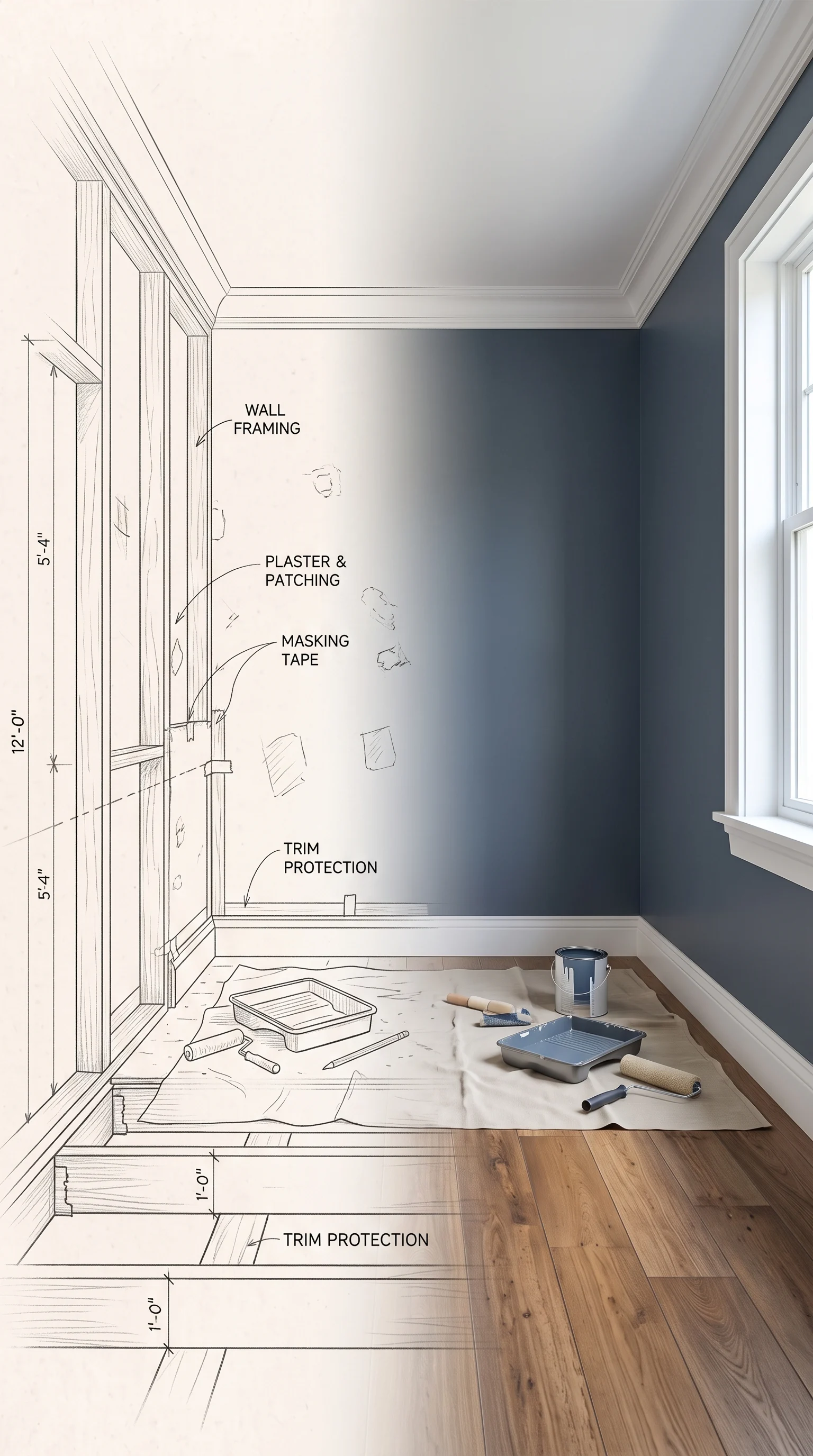
Painting and Finishing After Reconstruction / GREATER MONTRÉAL
The final appearance depends on preparation, finish choices and the details where reconstructed surfaces meet existing ones.
RECONSTRUCTION AFTER THE LOSS
Painting and finishing complete the visible surfaces of a reconstruction project after the affected components have been repaired and the necessary preparation is complete. Metrospec Construction coordinates this stage in Greater Montréal for residential and commercial interiors. The scope may include preparation of repaired walls and ceilings, paint, trim and the finishing details around doors, cabinetry and adjoining areas. We discuss colours, sheen, retained finishes and the practical boundaries of the work before application. New and existing surfaces may respond differently to light and finish, so expectations should be clear. Painting is part of completing the reconstruction, not a substitute for resolving damage or unfinished preparation beneath the surface.
DEFINE THE WORK
Coordinate the condition of repaired drywall and other surfaces before the finish is applied. Clarify patching, sanding, preparation and priming within the agreed work.
Discuss the areas to paint, colour and sheen. The boundaries should consider adjoining walls, ceiling planes and the way light falls across the surface.
Plan the finish around baseboards, casings, doors and other included details. Newly installed and retained components should be considered together.
Discuss the contents of the work area, access and protection of retained surfaces. Review finishing details and any remaining items as the reconstruction approaches completion.
BEFORE ORDERING OR STARTING WORK
A small repair does not always blend through touch-up alone. Discuss the surface, existing paint and lighting before deciding where the finish should stop.
Product names, colour references and samples help clarify the choice. Sheen and texture matter alongside colour when comparing new and existing finishes.
Surface repairs and related installation work can affect the finishing sequence. Clarify remaining work so the finished surfaces do not become an obstacle to later repairs.
BEFORE WE SPEAK
You can call even if some details are still being worked out. For an insured loss, keep your insurer or adjuster’s contact information handy as well.
EXPERIENCE BEHIND THE WORK
John Mitropoulos’s industry experience dates to 1995. It brings perspective to the connections between affected components, preparation and the practical decisions involved in rebuilding.

YOUR QUESTIONS, ANSWERED
Sometimes, but the result depends on the existing coating, age, sheen, texture and light. Discuss the expected appearance and painting boundaries before choosing a touch-up approach.
Painting is a finishing stage. The underlying damage and necessary cleanup, drying, remediation and repairs must be addressed as appropriate before the final finish is applied.
The agreed scope should specify the preparation and coatings required for the surfaces involved. Clarify priming and final coats rather than assuming they are included in every quoted item.
Yes. Discuss colour and sheen before application, along with the areas included. Expanding painting into unaffected rooms or choosing other improvements should be agreed separately.
Coverage depends on your policy and the assessment of the claim. Clarify the approved scope, any limits and payment arrangements with your insurer or adjuster; discuss optional improvements separately.
AFTER THE LOSS. THE NEXT STEP.
Tell us about the affected areas and what has already been completed. We can discuss the work that comes next.